

Understanding Domestic Violence and Recognizing the Warning Signs: Why Awareness Matters

By Jennifer Herbert, ATR-BC, LCAT, ATCS
Vice President of Program Development, Content & Training | Joe Torre Safe at Home
October 22, 2026
Every October, Domestic Violence Awareness Month (DVAM) gives us an opportunity to pause, learn, reflect, and take thoughtful action. Over the past twenty years, I’ve had the privilege of working alongside youth, adults, families, educators, and communities impacted by domestic violence. During that time, I’ve learned many things, but perhaps the most important is this: meaningful change almost always starts with a conversation.
I’ve seen young people find the words to describe a relationship that didn’t feel right. I’ve watched parents and caregivers navigate difficult conversations with courage and vulnerability. I’ve witnessed friends, coworkers, educators, and trusted adults create moments of connection that helped someone feel seen, supported, and less alone.
While awareness is important, awareness alone does not create change. Real and lasting change happens when we better understand what domestic violence looks like, recognize when someone may need support, and feel empowered to start thoughtful conversations that can make a difference.
Domestic violence, also referred to as intimate partner violence (IPV), is more common, more complex, and often less visible than many people realize. It impacts people of all ages, backgrounds, identities, and communities. Yet it can still be difficult to recognize, especially when there are no visible signs of harm.
Domestic Violence is About Power and Control
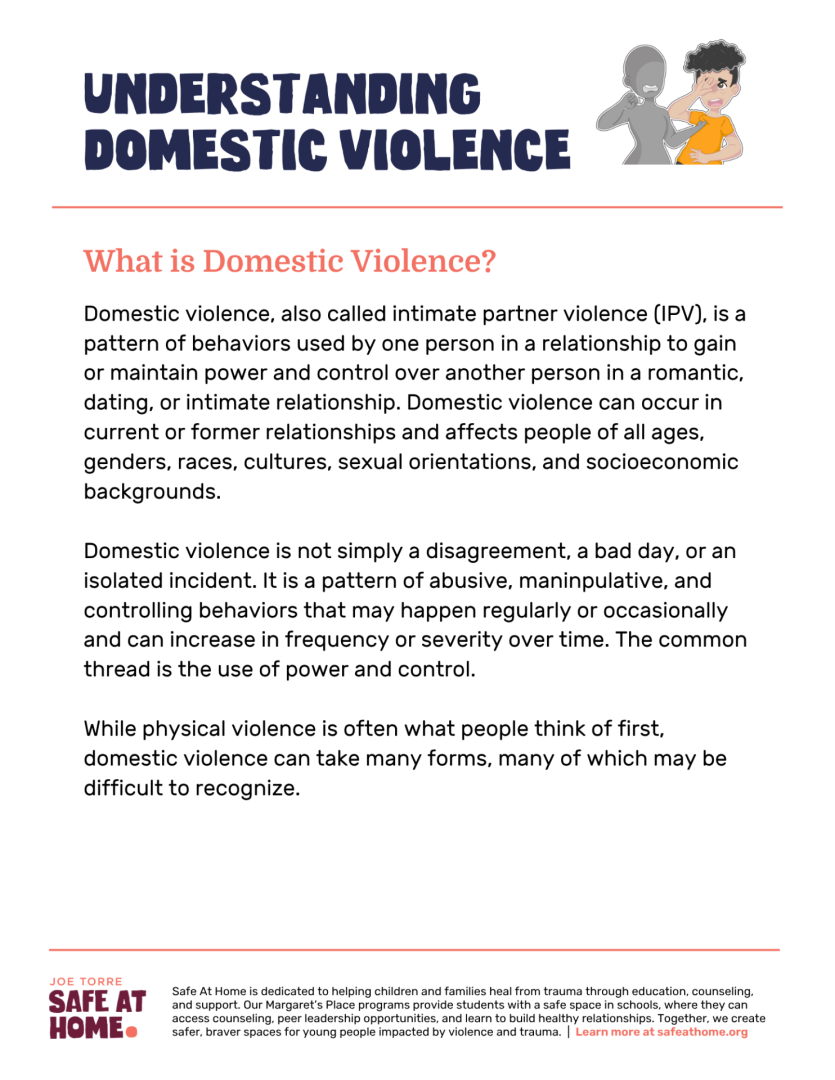
At its core, domestic violence is about power and control. It is a pattern of behavior used to gain and maintain control over another person in a relationship.
Sometimes, that pattern includes physical violence. Often, it also includes emotional manipulation, isolation, intimidation, financial control, sexual coercion, verbal abuse, or monitoring someone’s activities through technology.
Because these behaviors frequently develop over time, they can be incredibly difficult to recognize, especially for the person who is experiencing them. What may begin as jealousy can become control. What may seem like concern can become isolation. What may be dismissed as an argument can become a pattern of manipulation and fear.
I’ve spoken to countless people who questioned their own experiences because what they were going through didn’t match what they thought abuse was supposed to look like. That’s why education is so important. The more we understand about domestic violence, the more equipped we are to recognize it and respond with compassion.
The Warning Signs Aren’t Always Clear
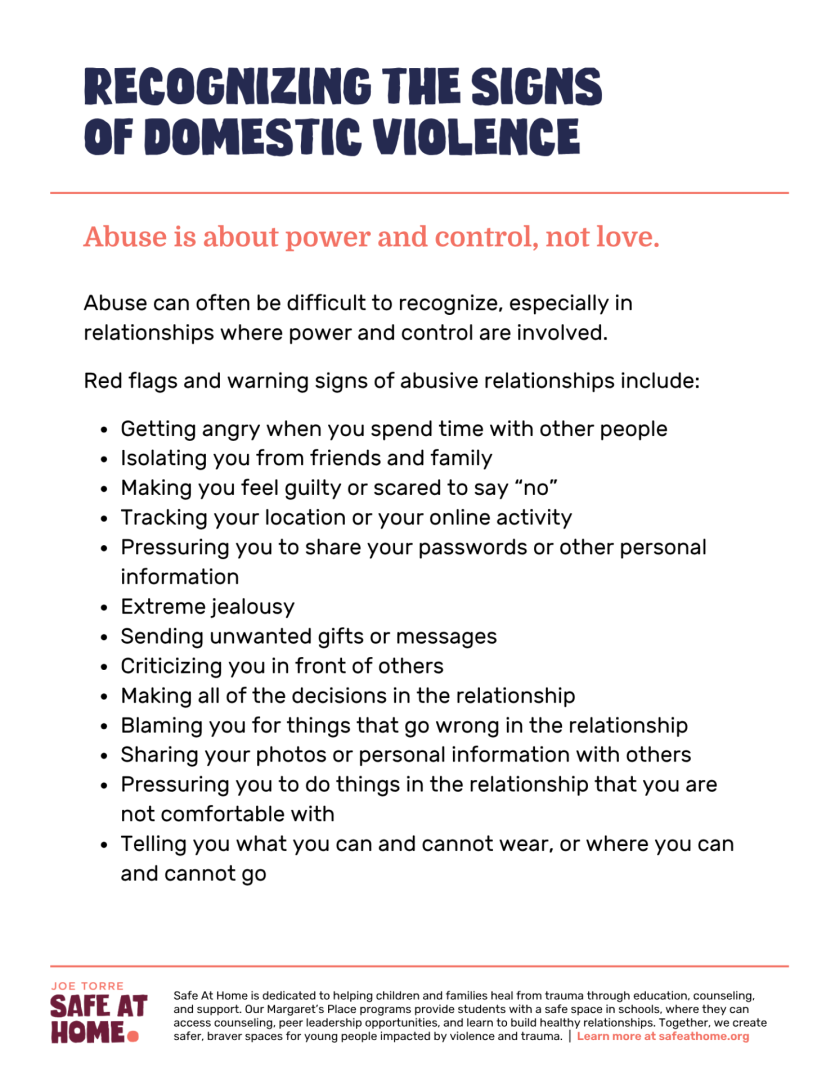
One of the biggest misconceptions about domestic violence is that if something serious was happening, it would be obvious. Warning signs don’t always look the way we expect them to. Many people don’t talk openly about experiencing abuse. They may minimize concerns, make excuses for their partner’s behavior, or choose to keep their experiences quiet. Some are worried about being judged, and others fear that they won’t be believed. Some are concerned about their safety, their children, their relationships, their housing, and their financial stability.
As a result, many people carry an incredible amount on their own before ever telling someone what is happening.
Some warning signs may include:
- A partner who frequently checks their phone, their messages, their online accounts, or their location
- Becoming increasingly isolated from friends, family, or activities they typically enjoy
- Feeling or appearing anxious about how their partner may react
- Sudden changes in self-confidence or self-esteem
- Having limited access to money, transportation, or decision-making
- Frequently canceling plans because a partner becomes upset
- A partner who is excessively jealous, possessive, or controlling
It’s important to remember that the presence of any of these signs does not automatically mean someone is experiencing abuse. But they can remind us to pay attention, stay connected, and approach others with curiosity and care, instead of making assumptions.
I’ve learned that support looks different to everyone. Before reaching out, consider the person’s safety, privacy, and readiness. Support often beings with something simple: noticing, listening, and letting someone know they don’t have to navigate challenges alone.
Supporting Young People Can Start with One Conversation
One question I hear all the time is: “What do I say if someone tells me they are experiencing abuse?” The answer is that most people don’t need you to have the perfect words. They need you to listen. They need you to believe them. They need you to resist the urge to judge, fix, or take cover. In my experience, some of the most meaningful responses are also the simplest:
- “Thank you for trusting me”
- “I’m glad you told me”
- “What happened is not your fault”
- “How can I support you?”
- “You are not alone”
These responses communicate a powerful message: I see you, I believe you, and I’m here with you.
What we avoid saying matters too. Questions like, “Why didn’t you leave?” or statements like “I would never stay in that situation” can unintentionally create shame and blame, and make it harder for someone to continue the conversation. When we approach these conversations with empathy, respect, and a willingness to listen, we help create conditions for others to feel safer reaching out for support.
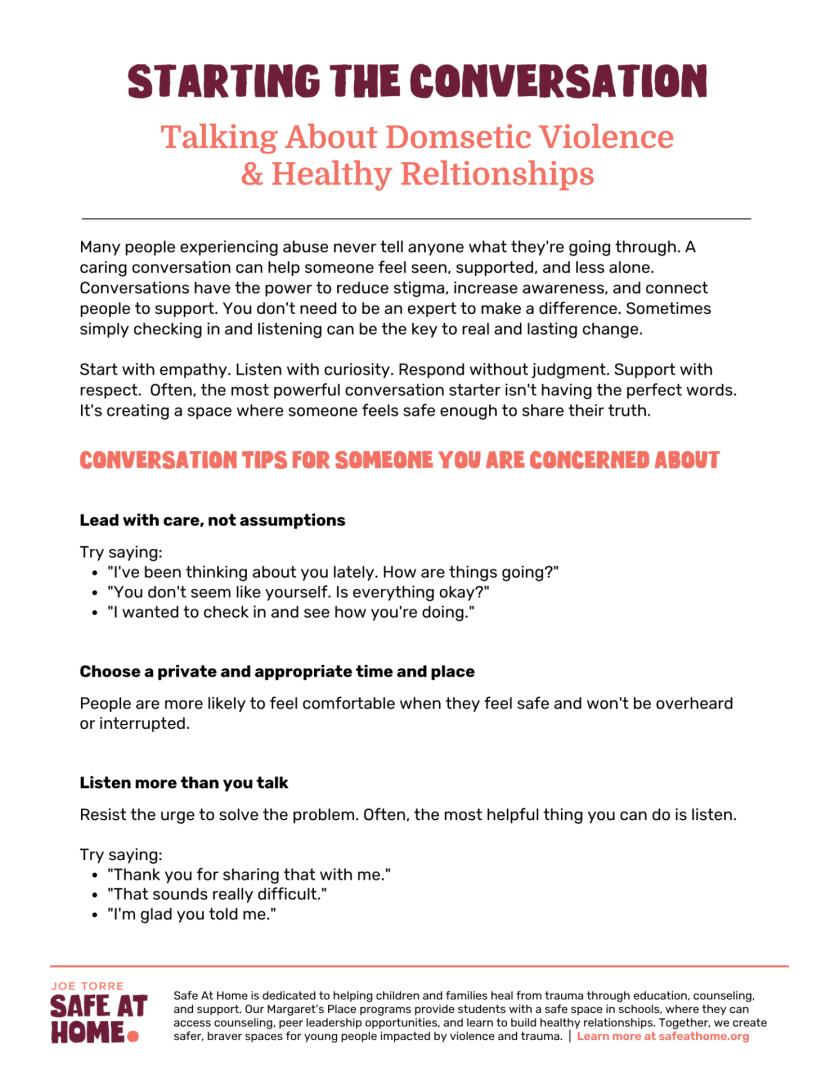
Download: Starting the Conversation
Prevention Starts with Everyday Conversations
One of the most meaningful lessons I have learned is that prevention does not begin during a crisis. Prevention starts much earlier. It starts when we talk about respect, boundaries, communication, consent, accountability, and healthy relationships. It starts when we create opportunities for reflection and discussion. It starts when we make space for questions.
I’ve worked with young people for most of my career, and one thing I know for sure is that they are already thinking deeply about relationships. They are navigating friendships, family dynamics, dating relationships, online interactions, and questions about identity and belonging every day.
They don’t need adults to have all the answers. What they need are trusted adults who are willing to listen, engage, and stay in the conversation. Whether you are a parent, caregiver, educator, coach, mentor, or family member, your voice matters. Your willingness to talk openly about healthy relationships matters.
And these conversations don’t have to be perfect. Some of the most impactful conversations happen in everyday moments: during a care ride, over dinner, after watching a movie, or when responding to something happening in the world around us.
Healthy relationships are built on respect, trust, communication, honesty, boundaries, accountability, support, and shared decision-making. When we help young people explore these concepts, we are not only teaching relationships skills, but we are also helping them develop the confidence, critical thinking, and self-awareness that can support them throughout their lives.
To support these conversations, we have created some additional resources:
Moving from Awareness to Action
I remain hopeful because I’ve seen what happens when people choose connection over silence. I’ve seen young people use their voices in powerful ways. I’ve seen families strengthen relationships through honest and tough conversations. I’ve seen educators create safer spaces for students. I’ve seen people recognize warning signs and offer support that makes others feel less alone.
This Domestic Violence Awareness Month, I invite you to take one small step. Share a resource. Start a conversation. Check in with someone you care about. Reflect on ways we can all contribute to communities built on safety, respect, and connection. Preventing violence is not the responsibility of a single person or organization. It takes all of us.
Safe At Home’s Your Voice Campaign Toolkit makes it easy, with information, messages, visuals, and resources you can use and customize to raise awareness and engage your community. To receive your toolkit, simply add your name to the Raise Your Voice Pledge.
You do not need to be an expert to make a difference. Every single conversation has the potential to increase understanding, reduce stigma, strengthen connection, and remind someone that support is available when they are ready. Often, that very conversation is exactly where change begins.

Jennifer Herbert, ATR-BC, LCAT, ATCS
Vice President of Program Development, Content & Training | Joe Torre Safe at Home Foundation
Jennifer Herbert, ATR‑BC, LCAT, ATCS, is an art therapist, trainer, and program leader with more than 20 years of experience in the mental health field, specializing in work with individuals and communities impacted by complex and compounded trauma. She currently serves as Vice President of Program Development, Training, and Content at the Joe Torre Safe At Home Foundation, where she provides clinical and programmatic leadership for trauma‑informed initiatives, overseeing program design, implementation, and partnership development to support prevention and intervention efforts. Jennifer delivers national and international training for educators and clinicians on trauma‑informed practice, vicarious trauma, organizational wellness, and creative arts therapy. She brings a strategic, relational approach to advancing evidence‑informed, responsive services that support children, adolescents, and adults across the lifespan.
Understanding Domestic Violence and Recognizing the Warning Signs: Why Awareness Matters
By Jennifer Herbert, ATR-BC, LCAT, ATCS
Vice President of Program Development, Content & Training | Joe Torre Safe at Home
October 22, 2026
Every October, Domestic Violence Awareness Month (DVAM) gives us an opportunity to pause, learn, reflect, and take thoughtful action. Over the past twenty years, I’ve had the privilege of working alongside youth, adults, families, educators, and communities impacted by domestic violence. During that time, I’ve learned many things, but perhaps the most important is this: meaningful change almost always starts with a conversation.
I’ve seen young people find the words to describe a relationship that didn’t feel right. I’ve watched parents and caregivers navigate difficult conversations with courage and vulnerability. I’ve witnessed friends, coworkers, educators, and trusted adults create moments of connection that helped someone feel seen, supported, and less alone.
While awareness is important, awareness alone does not create change. Real and lasting change happens when we better understand what domestic violence looks like, recognize when someone may need support, and feel empowered to start thoughtful conversations that can make a difference.
Domestic violence, also referred to as intimate partner violence (IPV), is more common, more complex, and often less visible than many people realize. It impacts people of all ages, backgrounds, identities, and communities. Yet it can still be difficult to recognize, especially when there are no visible signs of harm.
Domestic Violence is About Power and Control
At its core, domestic violence is about power and control. It is a pattern of behavior used to gain and maintain control over another person in a relationship.
Sometimes, that pattern includes physical violence. Often, it also includes emotional manipulation, isolation, intimidation, financial control, sexual coercion, verbal abuse, or monitoring someone’s activities through technology.
Because these behaviors frequently develop over time, they can be incredibly difficult to recognize, especially for the person who is experiencing them. What may begin as jealousy can become control. What may seem like concern can become isolation. What may be dismissed as an argument can become a pattern of manipulation and fear.
I’ve spoken to countless people who questioned their own experiences because what they were going through didn’t match what they thought abuse was supposed to look like. That’s why education is so important. The more we understand about domestic violence, the more equipped we are to recognize it and respond with compassion.
The Warning Signs Aren’t Always Clear
One of the biggest misconceptions about domestic violence is that if something serious was happening, it would be obvious. Warning signs don’t always look the way we expect them to. Many people don’t talk openly about experiencing abuse. They may minimize concerns, make excuses for their partner’s behavior, or choose to keep their experiences quiet. Some are worried about being judged, and others fear that they won’t be believed. Some are concerned about their safety, their children, their relationships, their housing, and their financial stability.
As a result, many people carry an incredible amount on their own before ever telling someone what is happening.
Some warning signs may include:
- A partner who frequently checks their phone, their messages, their online accounts, or their location
- Becoming increasingly isolated from friends, family, or activities they typically enjoy
- Feeling or appearing anxious about how their partner may react
- Sudden changes in self-confidence or self-esteem
- Having limited access to money, transportation, or decision-making
- Frequently canceling plans because a partner becomes upset
- A partner who is excessively jealous, possessive, or controlling
It’s important to remember that the presence of any of these signs does not automatically mean someone is experiencing abuse. But they can remind us to pay attention, stay connected, and approach others with curiosity and care, instead of making assumptions.
I’ve learned that support looks different to everyone. Before reaching out, consider the person’s safety, privacy, and readiness. Support often beings with something simple: noticing, listening, and letting someone know they don’t have to navigate challenges alone.
Supporting Young People Can Start with One Conversation
One question I hear all the time is: “What do I say if someone tells me they are experiencing abuse?” The answer is that most people don’t need you to have the perfect words. They need you to listen. They need you to believe them. They need you to resist the urge to judge, fix, or take cover. In my experience, some of the most meaningful responses are also the simplest:
- “Thank you for trusting me”
- “I’m glad you told me”
- “What happened is not your fault”
- “How can I support you?”
- “You are not alone”
These responses communicate a powerful message: I see you, I believe you, and I’m here with you.
What we avoid saying matters too. Questions like, “Why didn’t you leave?” or statements like “I would never stay in that situation” can unintentionally create shame and blame, and make it harder for someone to continue the conversation. When we approach these conversations with empathy, respect, and a willingness to listen, we help create conditions for others to feel safer reaching out for support.
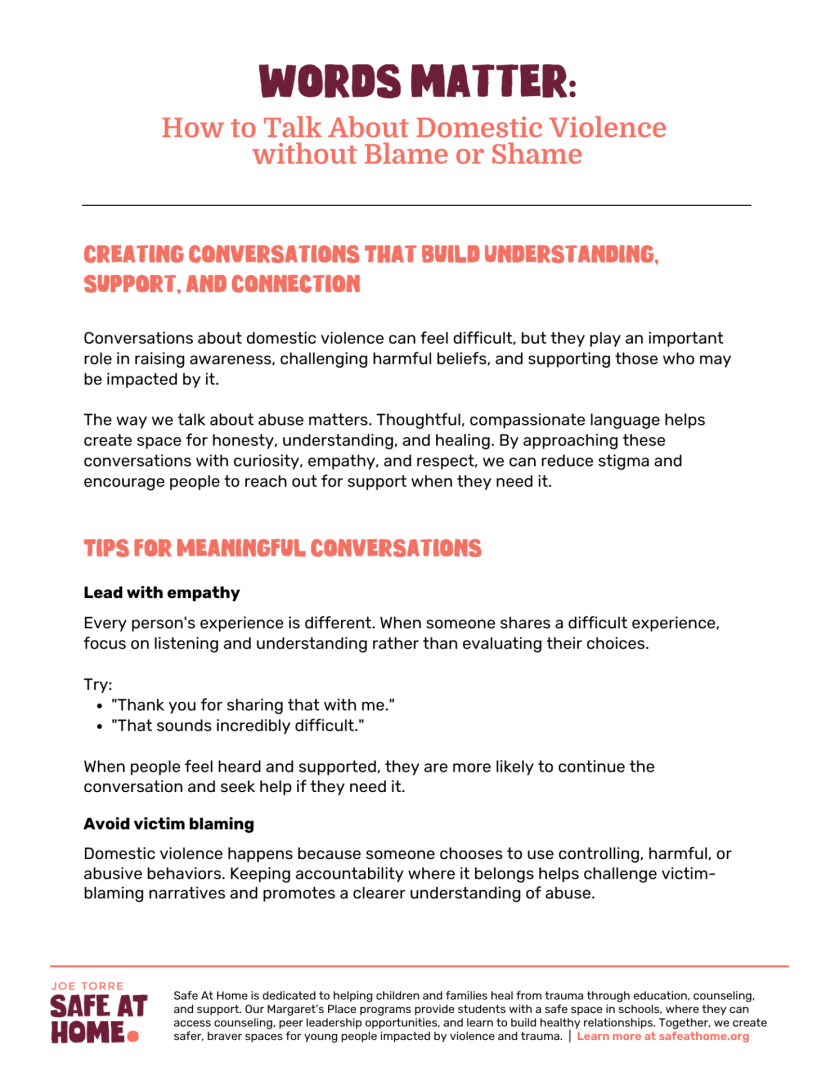
Download: Starting the Conversation
Prevention Starts with Everyday Conversations
One of the most meaningful lessons I have learned is that prevention does not begin during a crisis. Prevention starts much earlier. It starts when we talk about respect, boundaries, communication, consent, accountability, and healthy relationships. It starts when we create opportunities for reflection and discussion. It starts when we make space for questions.
I’ve worked with young people for most of my career, and one thing I know for sure is that they are already thinking deeply about relationships. They are navigating friendships, family dynamics, dating relationships, online interactions, and questions about identity and belonging every day.
They don’t need adults to have all the answers. What they need are trusted adults who are willing to listen, engage, and stay in the conversation. Whether you are a parent, caregiver, educator, coach, mentor, or family member, your voice matters. Your willingness to talk openly about healthy relationships matters.
And these conversations don’t have to be perfect. Some of the most impactful conversations happen in everyday moments: during a care ride, over dinner, after watching a movie, or when responding to something happening in the world around us.
Healthy relationships are built on respect, trust, communication, honesty, boundaries, accountability, support, and shared decision-making. When we help young people explore these concepts, we are not only teaching relationships skills, but we are also helping them develop the confidence, critical thinking, and self-awareness that can support them throughout their lives.
To support these conversations, we have created some additional resources:
Moving from Awareness to Action
I remain hopeful because I’ve seen what happens when people choose connection over silence. I’ve seen young people use their voices in powerful ways. I’ve seen families strengthen relationships through honest and tough conversations. I’ve seen educators create safer spaces for students. I’ve seen people recognize warning signs and offer support that makes others feel less alone.
This Domestic Violence Awareness Month, I invite you to take one small step. Share a resource. Start a conversation. Check in with someone you care about. Reflect on ways we can all contribute to communities built on safety, respect, and connection. Preventing violence is not the responsibility of a single person or organization. It takes all of us.
Safe At Home’s Your Voice Campaign Toolkit makes it easy, with information, messages, visuals, and resources you can use and customize to raise awareness and engage your community. To receive your toolkit, simply add your name to the Raise Your Voice Pledge.
You do not need to be an expert to make a difference. Every single conversation has the potential to increase understanding, reduce stigma, strengthen connection, and remind someone that support is available when they are ready. Often, that very conversation is exactly where change begins.
Jennifer Herbert, ATR-BC, LCAT, ATCS
Vice President of Program Development, Content & Training | Joe Torre Safe at Home Foundation
Jennifer Herbert, ATR‑BC, LCAT, ATCS, is an art therapist, trainer, and program leader with more than 20 years of experience in the mental health field, specializing in work with individuals and communities impacted by complex and compounded trauma. She currently serves as Vice President of Program Development, Training, and Content at the Joe Torre Safe At Home Foundation, where she provides clinical and programmatic leadership for trauma‑informed initiatives, overseeing program design, implementation, and partnership development to support prevention and intervention efforts. Jennifer delivers national and international training for educators and clinicians on trauma‑informed practice, vicarious trauma, organizational wellness, and creative arts therapy. She brings a strategic, relational approach to advancing evidence‑informed, responsive services that support children, adolescents, and adults across the lifespan.
